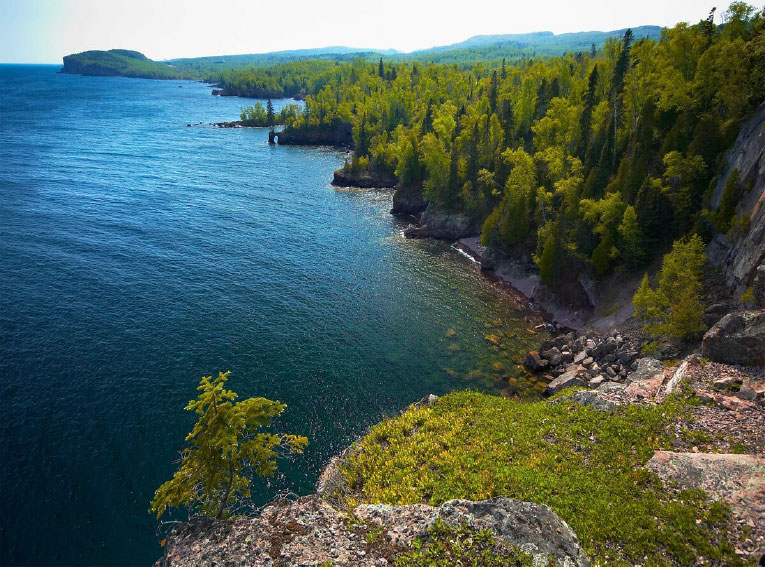
Welcome to LAKE BAIKAL
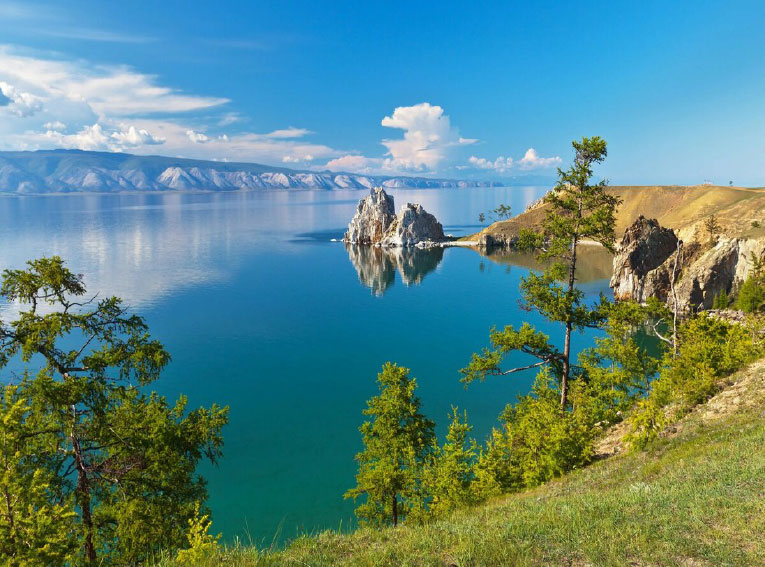
Lake Baikal, located in the south of Eastern Siberia, on the border of the Irkutsk region and the Republic of Buryatia, is one of the most ancient reservoirs of our planet.
But most of all it is known for being the deepest lake on Earth and at the same time the largest natural reservoir of fresh water - 19% of all world reserves.
Main information about the Lake
The outlines of Lake Baikal look like a narrow crescent moon, so easy to remember that it is easily found on the map.
Having stretched from the south-west to north-east for as much as 636 kilometers, Baikal seems to squeeze between the mountain ranges, and its water surface is located at an altitude of more than 450 meters above sea level, which gives every reason to consider it a mountain lake.
The depth of the lake is truly impressive - 1637 meters. The remaining deepest lakes in the world, there are twenty-two in all, have a depth of less than 600 meters.
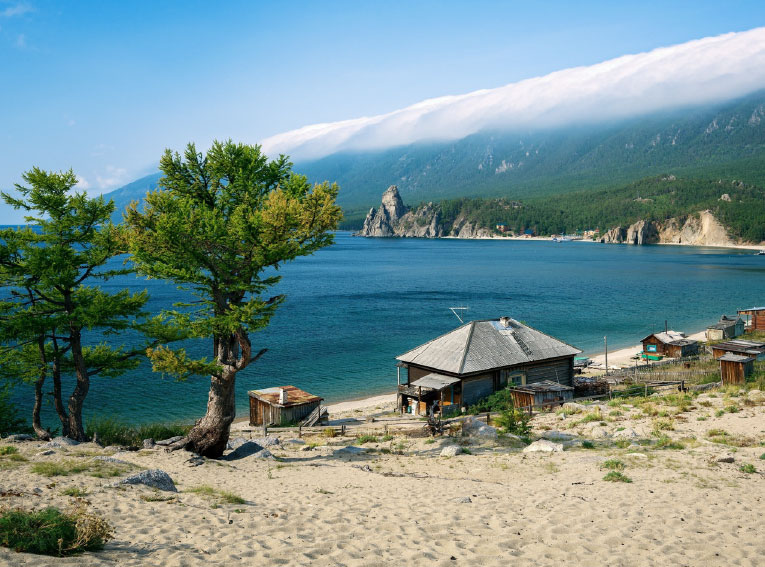
And the climatic conditions on Lake Baikal, which is called, to match its unique features: here the sun is mercilessly blowing and cold winds are blowing, then storms are raging and the quietest weather is conducive to beach holidays.
The coastline of the Siberian “crescent” is 2100 km long, 27 islands are located on it. 23 615, 39 km³ - such a fantastic figure measures the reserves of Baikal water. Baikal takes the first line of the world rating for fresh, i.e. potable water. In addition, it is extremely transparent, and all thanks to a very small amount of suspended and dissolved minerals.
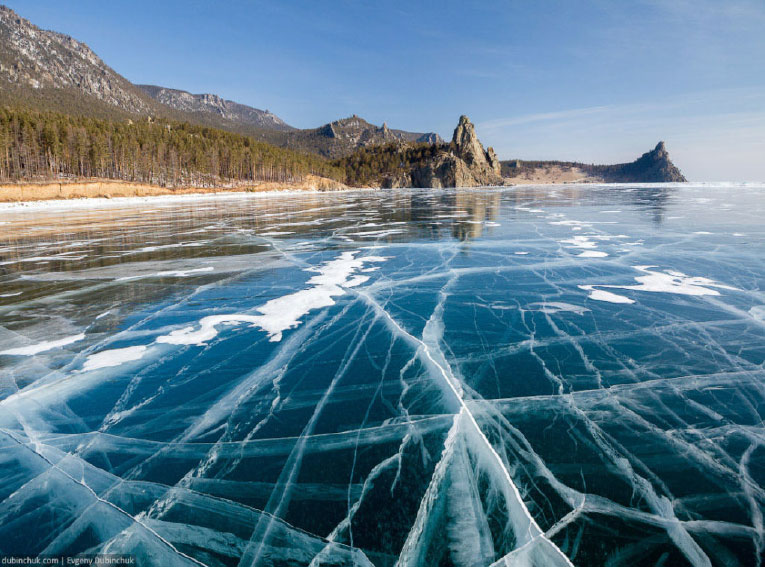
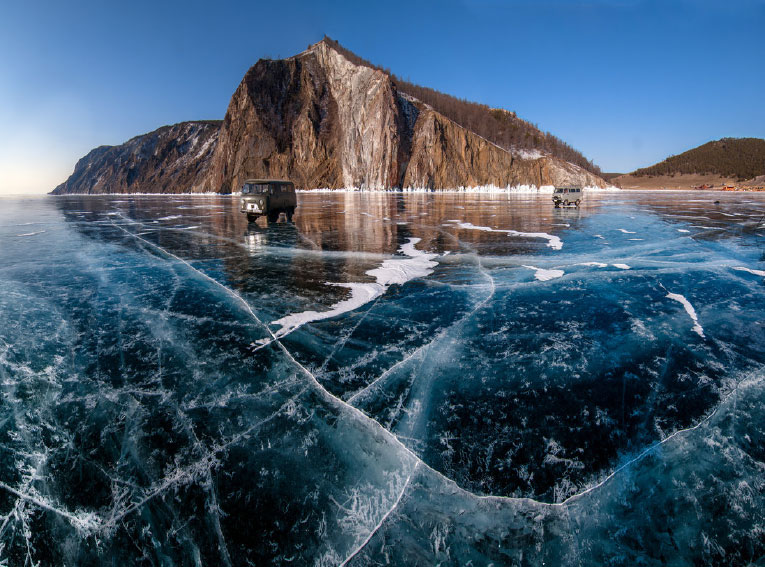
The freeze-up time on the lake lasts on average from early January to early May. During this period, it freezes almost completely. The exception is only a small 15-20-kilometer section located at the source of the Angara. At the end of winter, the thickness of the ice can reach 1 meter, and in the bays even more - one and a half to two meters.
In severe frosts, huge cracks form on the ice, which are called "dead gaps." They are so impressive that they can reach a length of 10 to 30 km. The width, however, is small: only 2-3 m.
For visitors
Park mode
It was along the Circum-Baikal Railway in the 80s of the XX century that the Sputnik International Youth Tourism Bureau (Irkutsk) developed the first ecological tour. Since that time, ecotourism on Lake Baikal has been actively developing, despite the fact that the tourism infrastructure here is not well developed, there are some transport difficulties.
The most favorable time for relaxing on the lake is the period from May to October. You can swim in July and August, because these months are the hottest - the air warms up to + 30 ° C, shallow water - up to + 25 ° C. Holidays on Lake Baikal will satisfy the needs of even the most demanding tourists. Beach holidays, bike and car excursions, hiking along the coast, rafting on catamarans and kayaks, quad biking and even helicopter excursions.
How to get there
You can get to Lake Baikal in various ways. The starting point, as a rule, is the nearby large cities: Irkutsk, Ulan-Ude, Severobaykalsk. Tourists first come to one of these settlements and already there in detail plan their further route.
The trip on the section of the Trans-Siberian Railway between Ulan-Ude and Irkutsk is especially memorable: the lake extends right outside the train windows and you can enjoy its magical panorama for hours.
Where to stay
Many tourists come to rest on Lake Baikal, as they say, savages, getting on their cars. They choose the place they like on the coast and stop there, spending the night in tents.
Such experiences will be spared by those who prefer to travel in comfort, even if minimal. There are many hotels, recreation centers and guest houses scattered across the coast of Lake Baikal. Moreover, each tourist will be able to find the most suitable accommodation option for him - taking into account, of course, individual preferences and financial opportunities.